It’s a real hub of community conversation. It’s important to a lot of people. – Mary Hayman
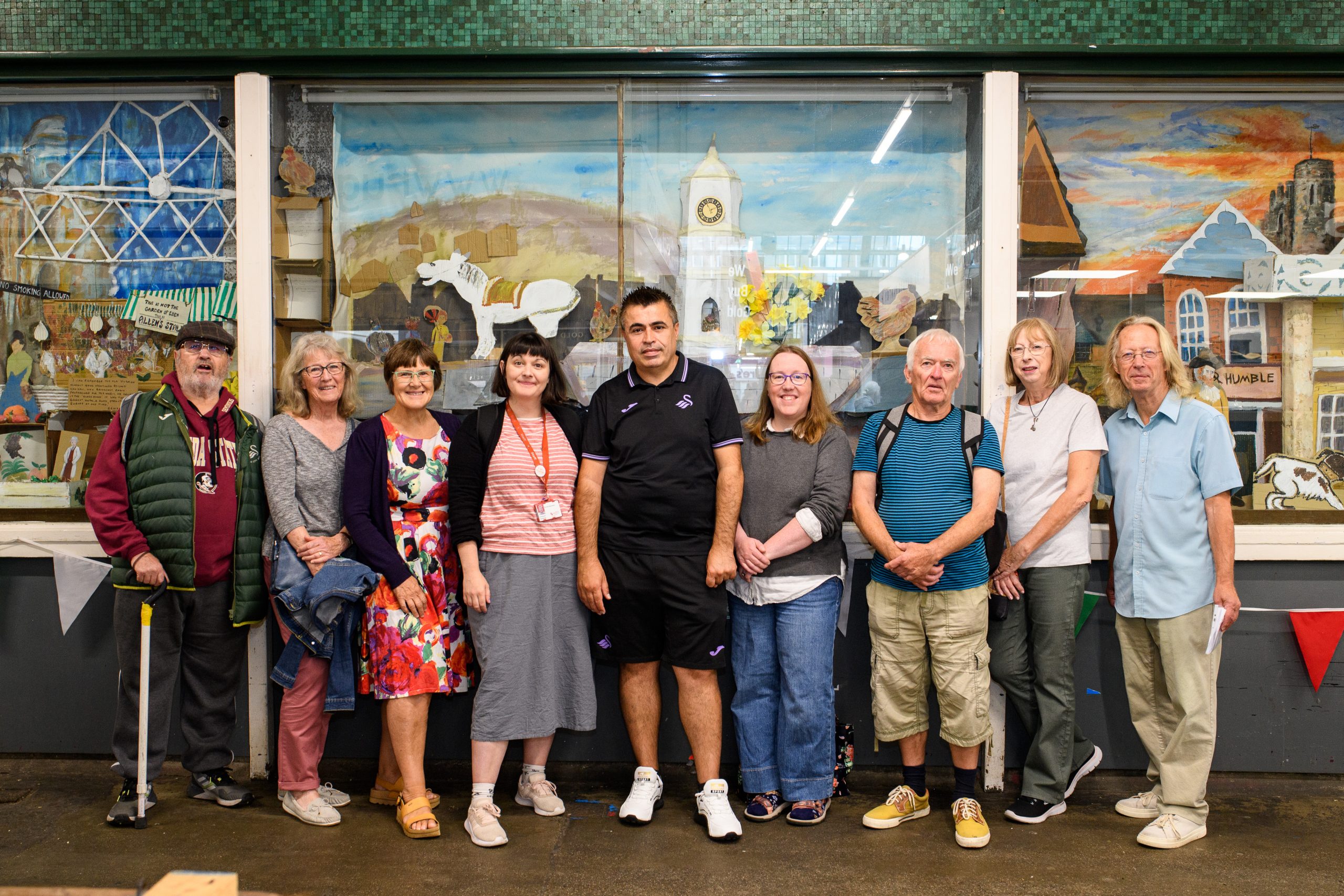
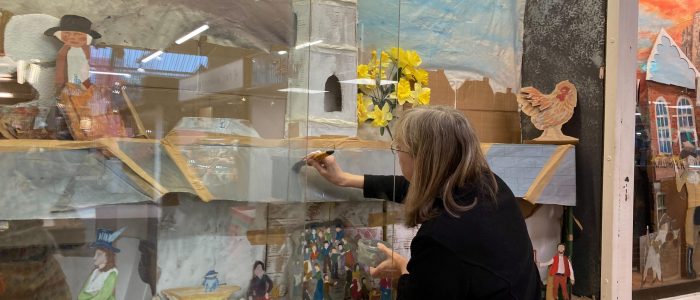
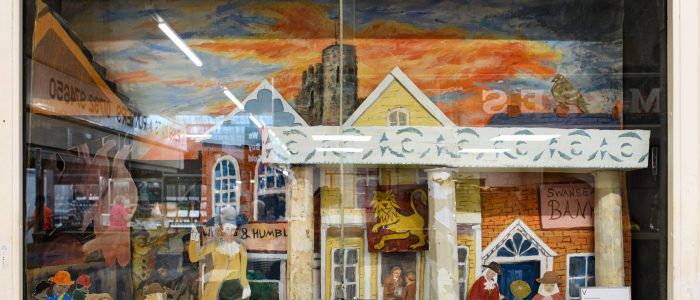
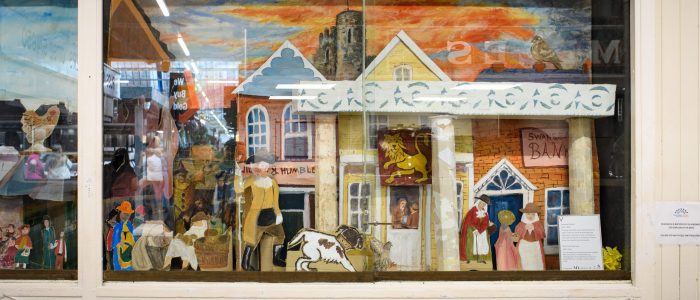
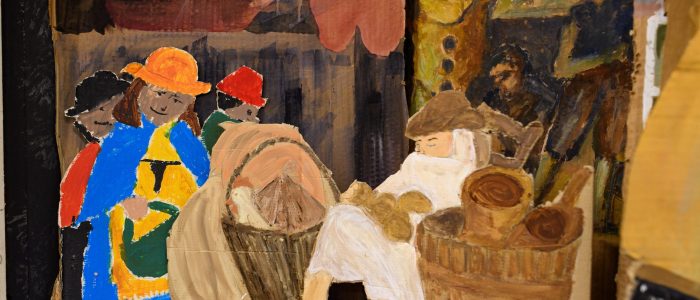
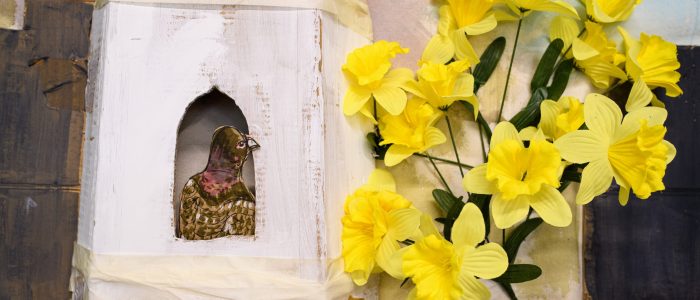
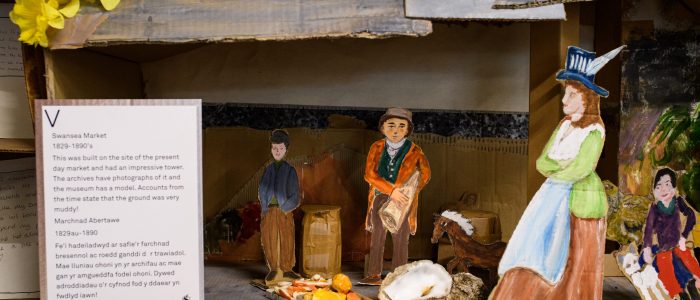
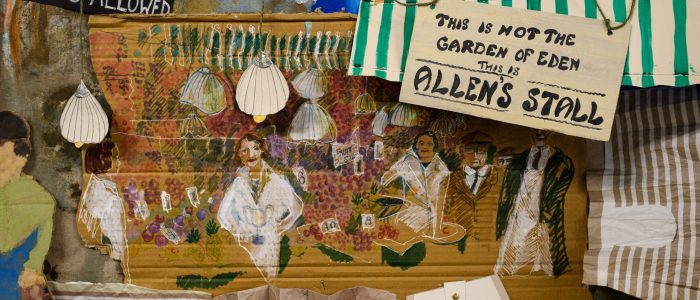
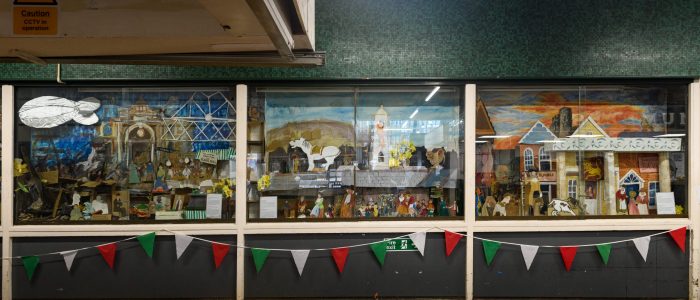
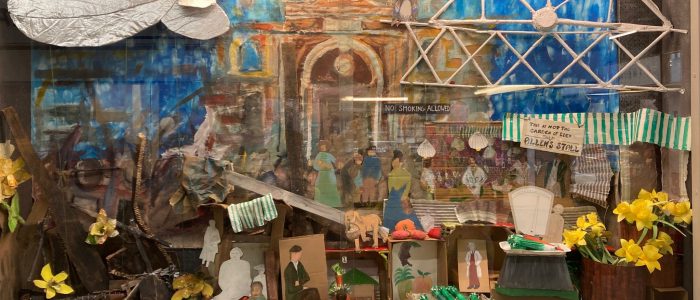
Market Share is a Glynn Vivian Art Gallery outreach project that explores the changing history of Swansea Market. Inspired by two paintings from the gallery’s Permanent Collection: Entrance to Swansea Market, 1941 by Will Evans and Swansea Market (1830) by Calvert Richard Jones, local artist Mary Hayman and artists Rhiannon Morgan, Elissa Evans, Melissa Rodrigues and Anna Barratt worked onsite with participants and passers-by to create a collaborative installation that celebrates the history of this Swansea institution.

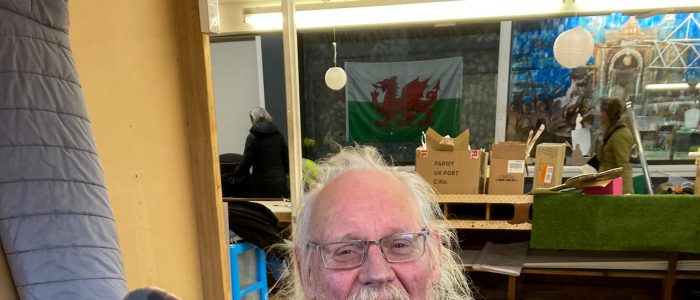
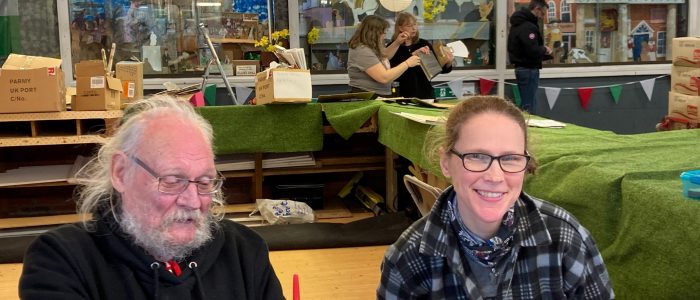

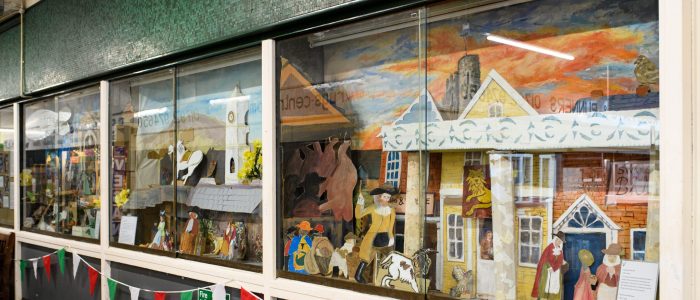
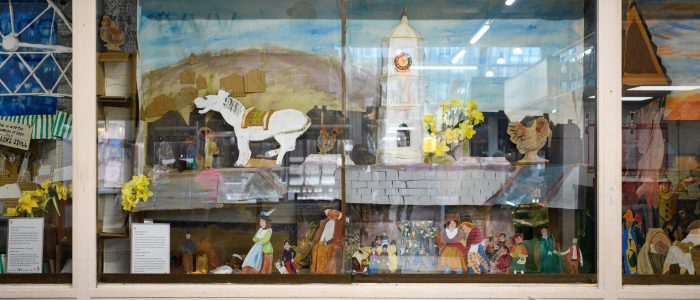
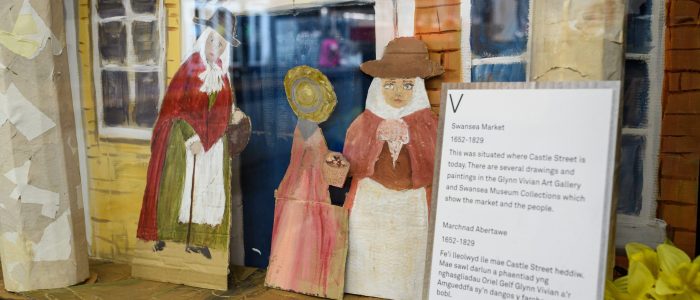
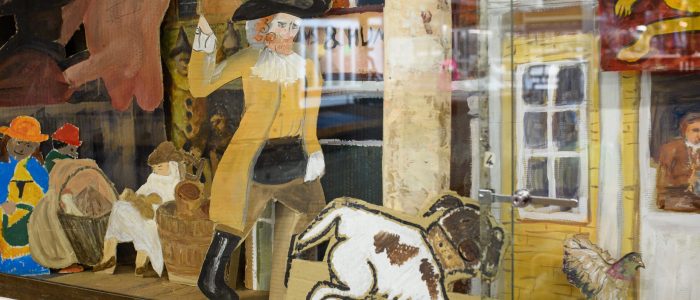
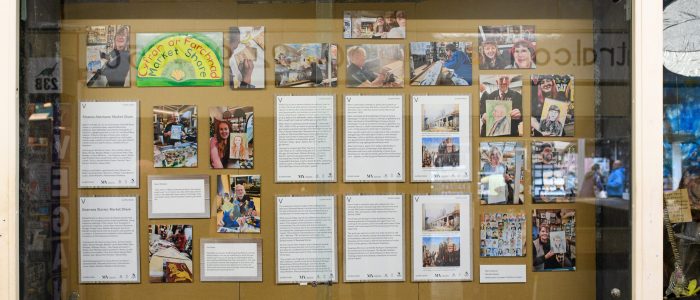


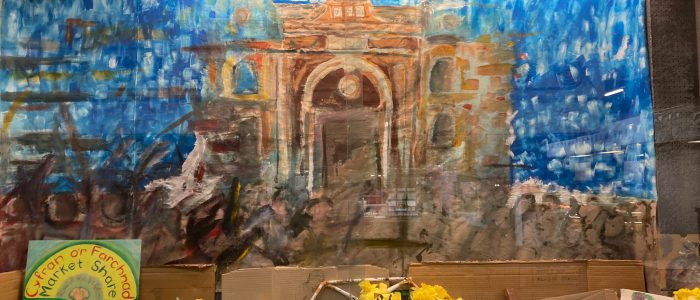
Participants: Mr. Dennis Jones | Tara | Jemila | Hanan Beko | Marilyn Morgan (Mally) | Laura Gwen Miles | Ben Rowden | Williams family – Joe, Hayley and Jason | Bilqis | Sian Phillips | Owen Leutshford | Anne, Liz and Cynthia from Llanelli | Chris from Mavis Davies Stall | Jemila | Tara | Sylvia from Pontlliw | Hanan Beko
Contributing passers-by: Anne Peters | Ivor Sloan | Ganimet Kaldi | Maureen and Phillys | Cena Brown | Laura | Dawn Williams | Mohammad Chowdury
I just love it, the atmosphere there – buying things from real people that you can talk to. – Mary Hayman
The market you stand in today is the communal centre of Swansea. Whilst it may have moved and changed over the years, it has always been present in one form or another, a place for Swansea’s diverse communities to meet, talk and trade. The rich history and community spirit of the market was the catalyst for artist Mary Hayman to create a collaborative installation that tells its story. Two key paintings from the gallery’s Permanent Collection provided the inspiration and a starting point for the installation: Will Evans oil painting Entrance to Swansea Market 1941, and Calvert Richard Jones’ watercolour Swansea Market (1830).
The market is a great place…Its sort of the heart of Swansea. And I think Mary feels that because an awful lot of the project is going round and talking to the people that are here. – Gerald Gabb (Historian)
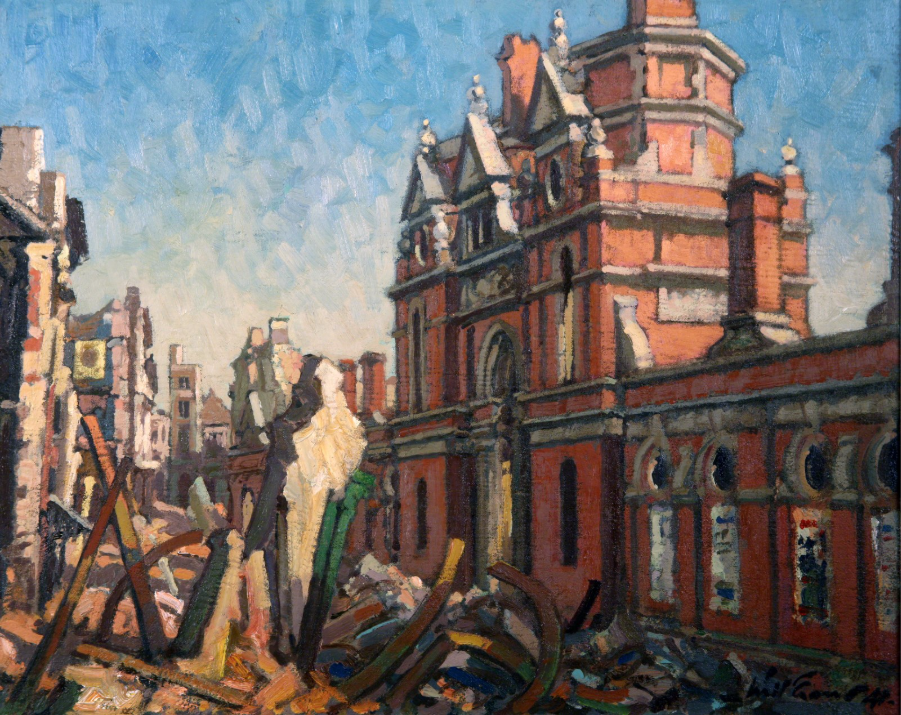
Will Evans: Entrance to Swansea Market 1941. 1941. Oil on Panel.
Mary’s response to Entrance to Swansea Market, 1941 by Will Evans
‘It was bombed during the war. There are quite a few photographs of this building. It was a phenomenal building, huge with, i believe, the biggest covered glass area in Europe at the time. It had electrics because a brewery next door supplied them with electric lights, which was very early on, and I believe it had proper flooring because the previous market had become inadequate, muddy and dirty and horrible. This was a real step up. A very grandiose building, red brick with lovely edging…ornate, a bit like the art gallery (Glynn Vivian) really. Similar era, I believe it was built around the 1880s, when a lot of Swansea was being built, very grandiose, very big and you can see even the sides of it were solidly built. [There] are piles of debris because the whole place was bombed, all of the roof was destroyed…it is in the same place as the market is now. The last three markets were all built on the same site which was originally a ‘Rope-Walk’ where they used to make ropes for the ships. The Germans thought this would stop people buying food but the market stall-holders just set up all round it. There are still people who can remember how muddy it was. Looking at this series [Will Evans’ Blitz paintings] and you line them up in date order, they get less grim. He obviously got less depressed as time went on.
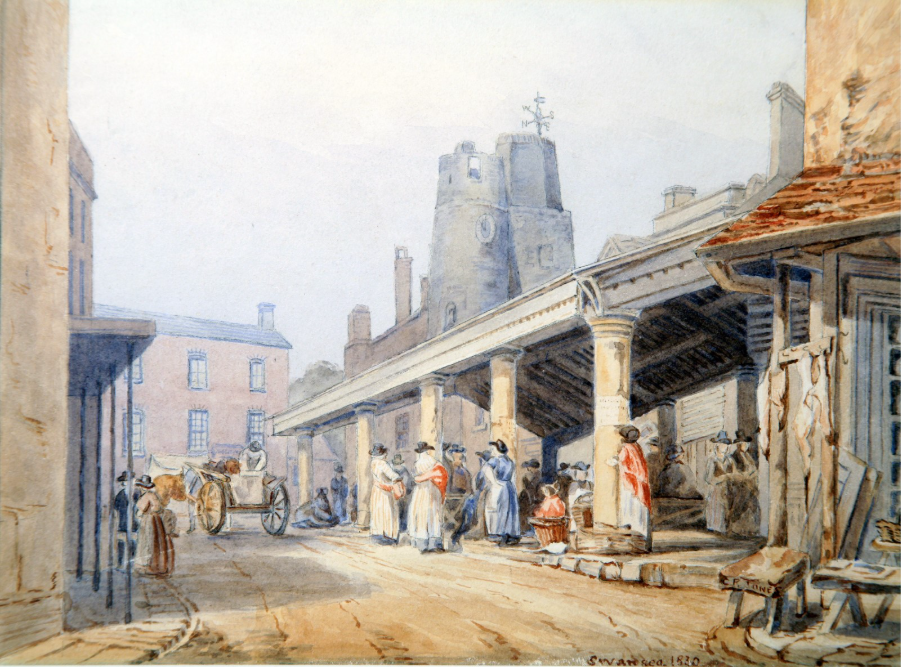
Calvert Richard Jones: Swansea Market. 1830. Watercolour on paper.
Mary’s response to Swansea Market (1830) by Calvert Richard Jones
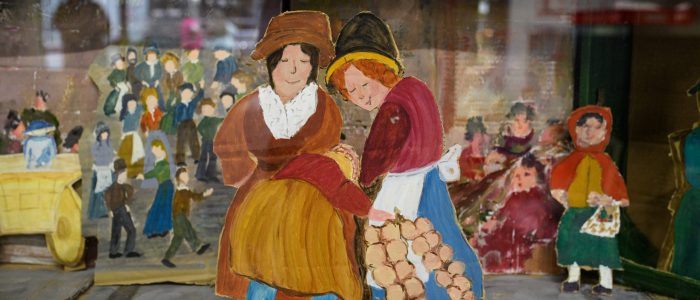
This is one of the first depictions of Swansea Market. There are a few earlier ones in the British Museum. It was originally over near the castle…three storey Georgian buildings, various horses and carts…the main bit seems to have had a roof with pillars in front of it, open underneath and people selling there with baskets and black Welsh-looking hats on, and people talking, women wearing shawls…it would have been more or less in castle square and all the streets leading up to it had the names of animals and things because the animals would have been being traded in the same place. The animals were eventually moved over near the tannery by the station. It’s a lively painting…it gives a good idea of a lively bustling place.
Calvert Richard Jones. A rich man, he lived in Heathfield house above the town. A big house. Owned masses of land. Lots of the houses that people lived in, they paid rent to Calvert Jones. A very proficient draftsperson and painter, and photographer, a very early photographer right at the beginning of everything. A rich man that didn’t suffer ordinary people all that gladly, I don’t think. His painting of the earliest market is quite a quiet one. It almost looks like the end of the day when, you know, the big trade has calmed down. There is a [similar] painting in the British Museum and it is wild. Dogs running around, people close to fighting, others getting to know each other quite well. Calvert Jones’ is quieter, but its a really good comparison. – Gerald Gabb (Historian)
The world’s most wonderful store!
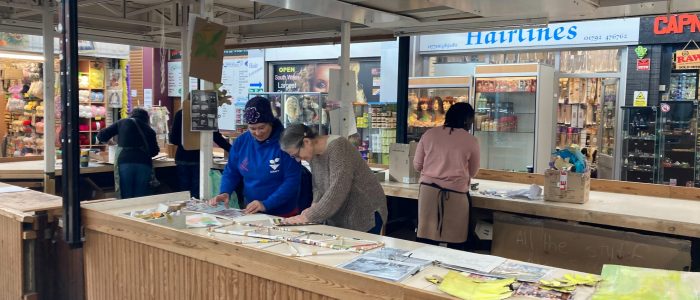
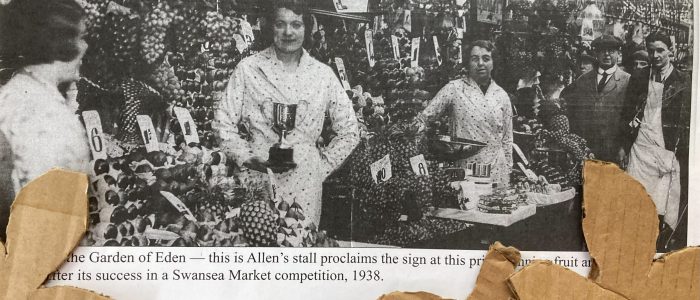
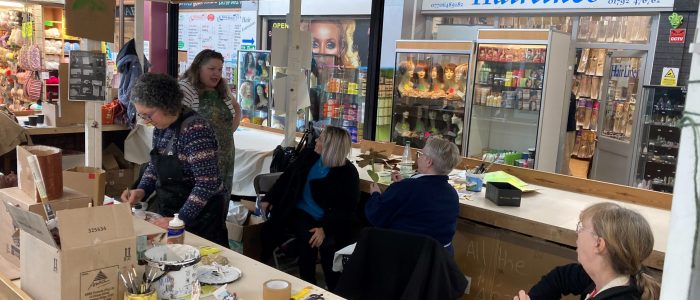
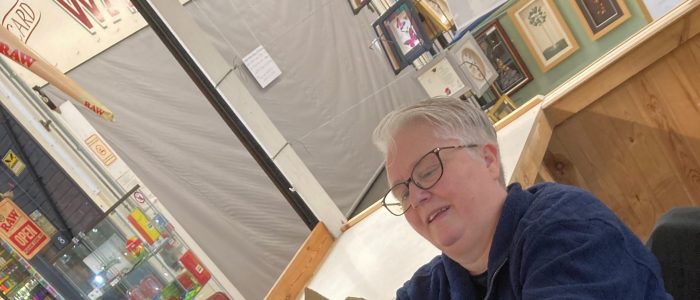
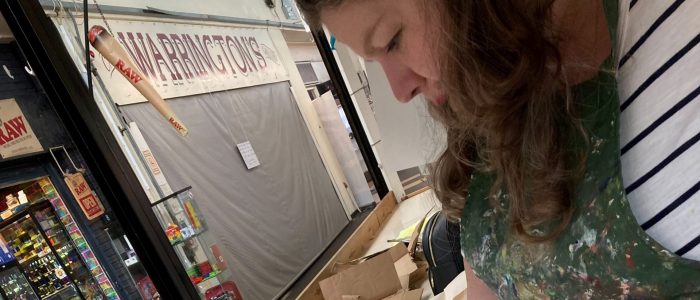
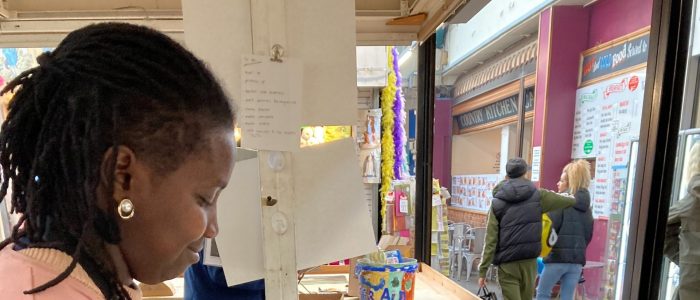
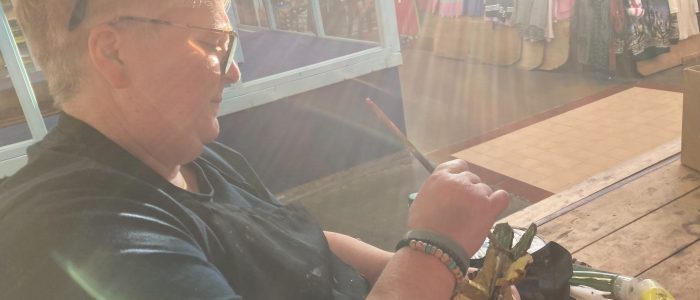
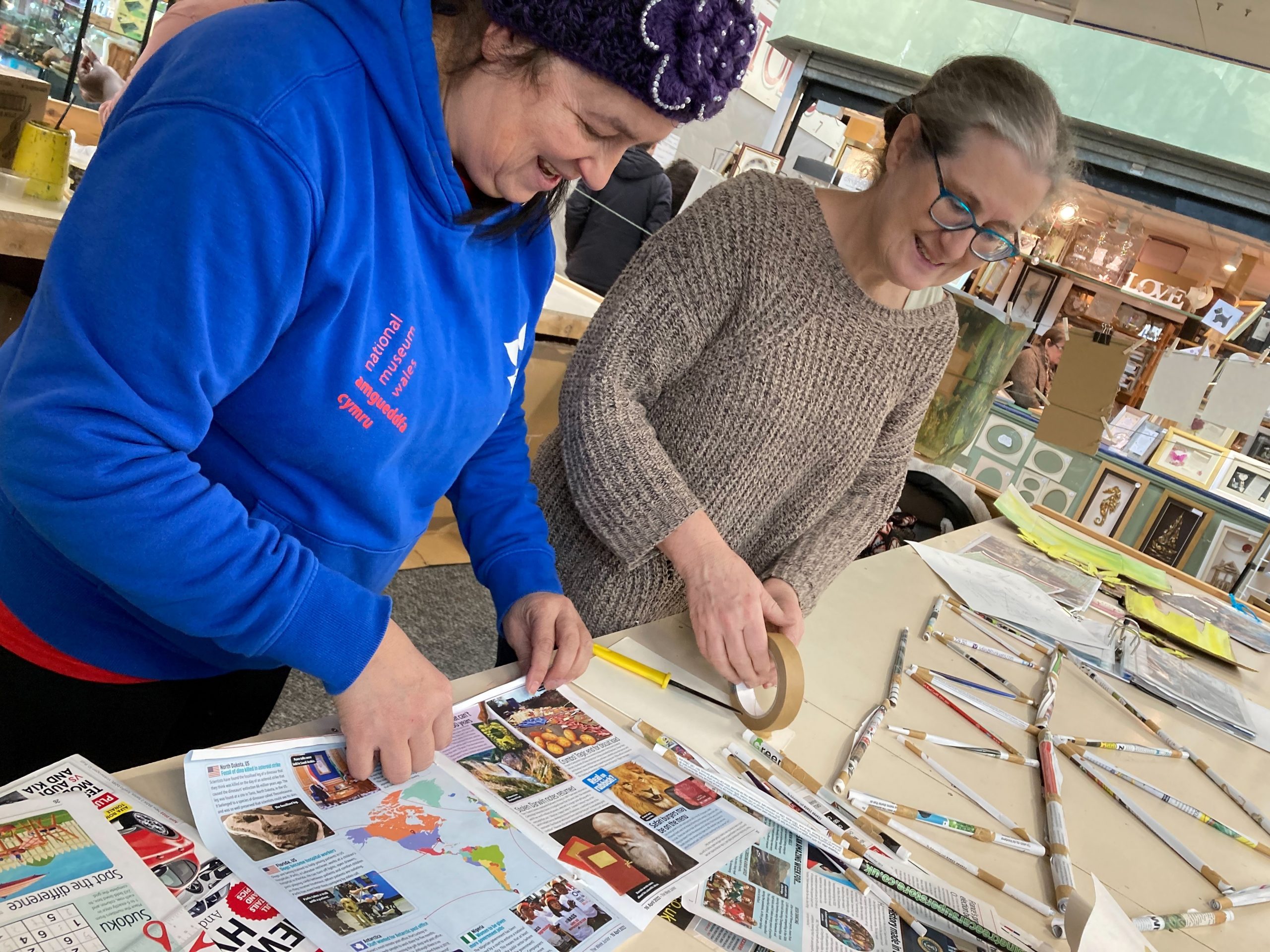
Mary and her team set up a workshop space in a disused trading stall, amongst the hustle and bustle of the market’s shops and cafes. From here Mary invited members of the public to get involved with the project. Introducing passers-by to the paintings gave participants a chance to learn more about the story behind the works, the history of the market itself and the people that continue to bring it to life.
I remember my dad buying meat which smelled smokey after the bombing. – Phylis
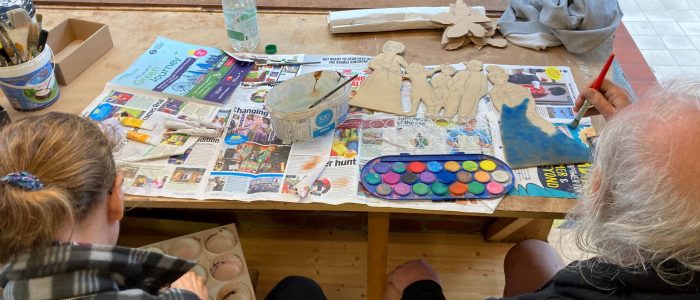
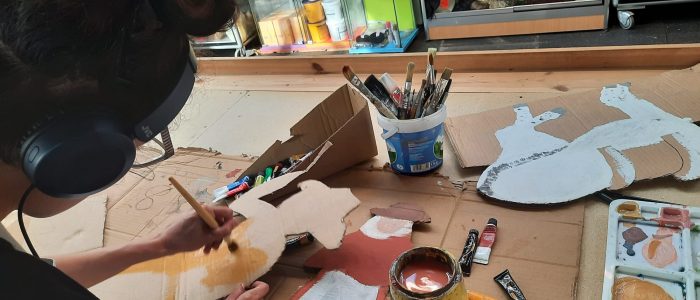
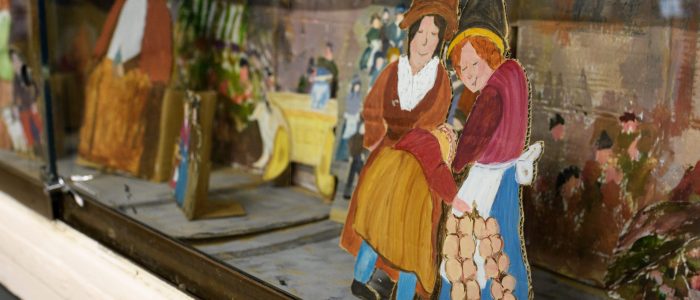
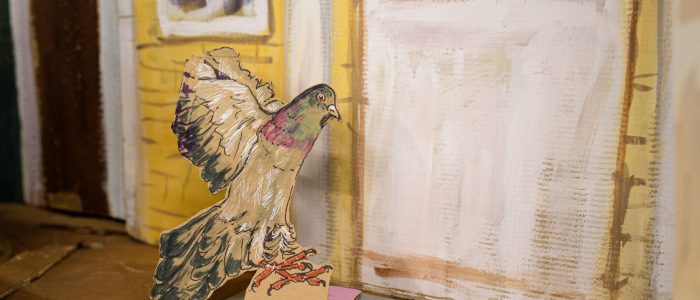
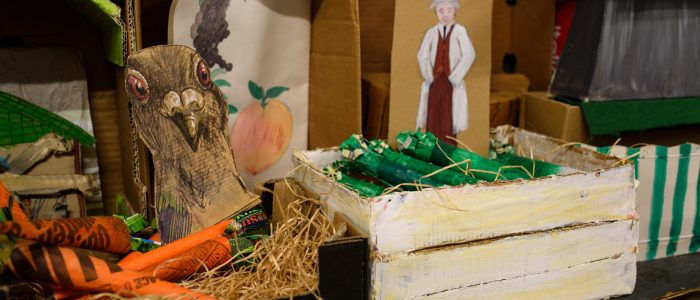
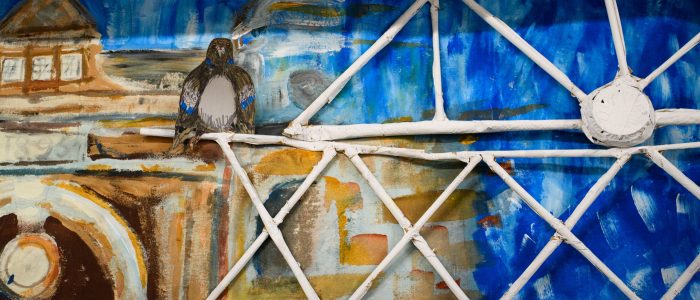
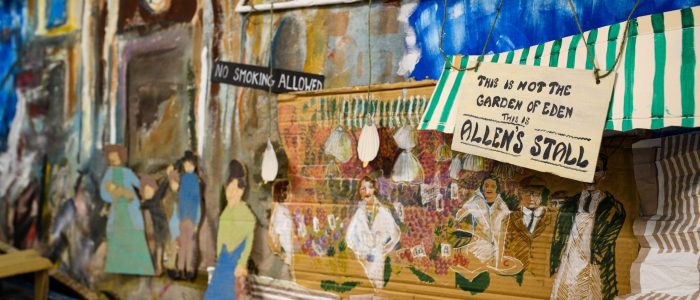
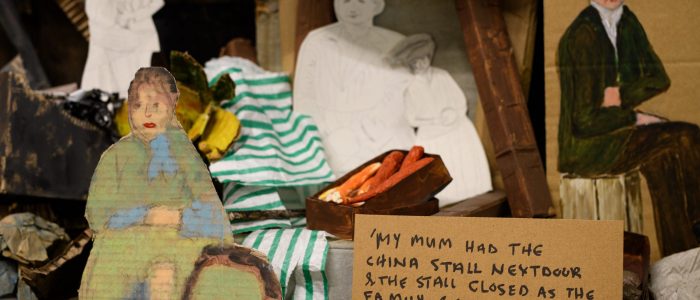
Old cardboard fruit boxes and other waste materials from the market were used to create the structures that would become the installation. Stories and ideas were collected and added to the developing constructions. This method of working meant that the market as a place, and the people that use it are embodied in the final work.
I remember ‘Mel the Books’. He knew my parents and looked like my dad. I’d go to his bookstall and spend my pocket £…and he’d always give me a free book. – Liss
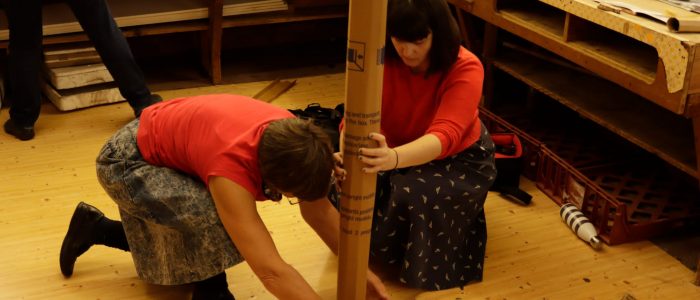
Over the weeks and months, the installation grew and developed, with more, and more, people getting involved. Mary and her team created a welcoming environment for participants to create and respond to the paintings, gradually collecting regular attendees, passers-by and intrigued market stallholders. Each person had a story to tell, each person a unique relationship with the market. The stories and the histories, the people and the place, are woven into the fabric of this installation, creating a narrative that is historical, but also, uniquely of the moment.
The artists and the Glynn Vivian Art Gallery have the deepest gratitude to the people who spent their time working on this project, and to the staff and traders of the market, who have supported the Market Share project from its beginning. In addition to this a big thanks must go to Gerald Gabb, Swansea Museum and Swansea Archives for all their help.
P.s Sometime after the project ended, Mary set up her own art stall in the market, her journey going full circle. Mary is now a part of the story she has helped to tell.
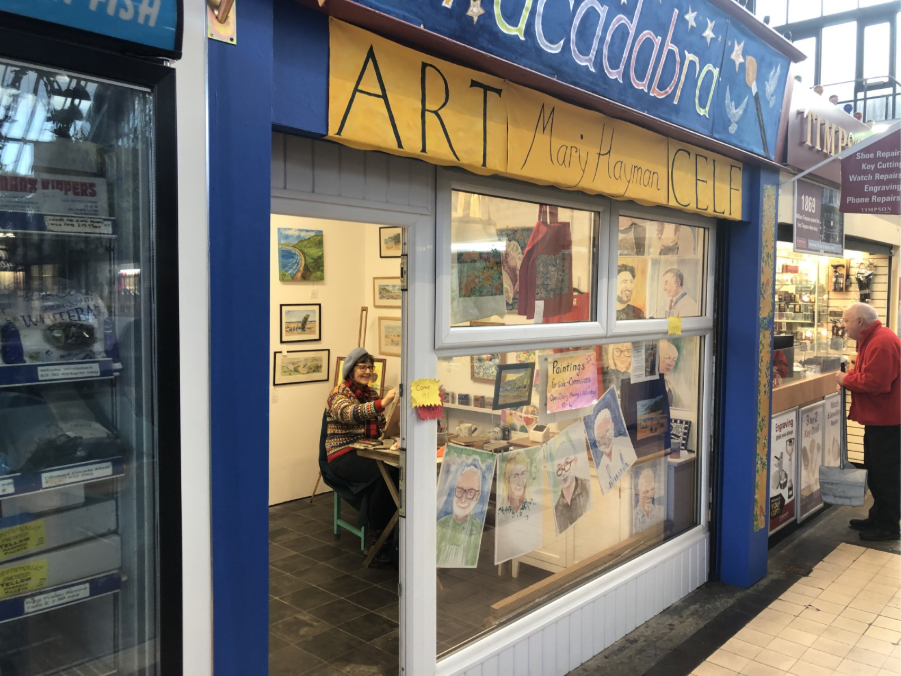
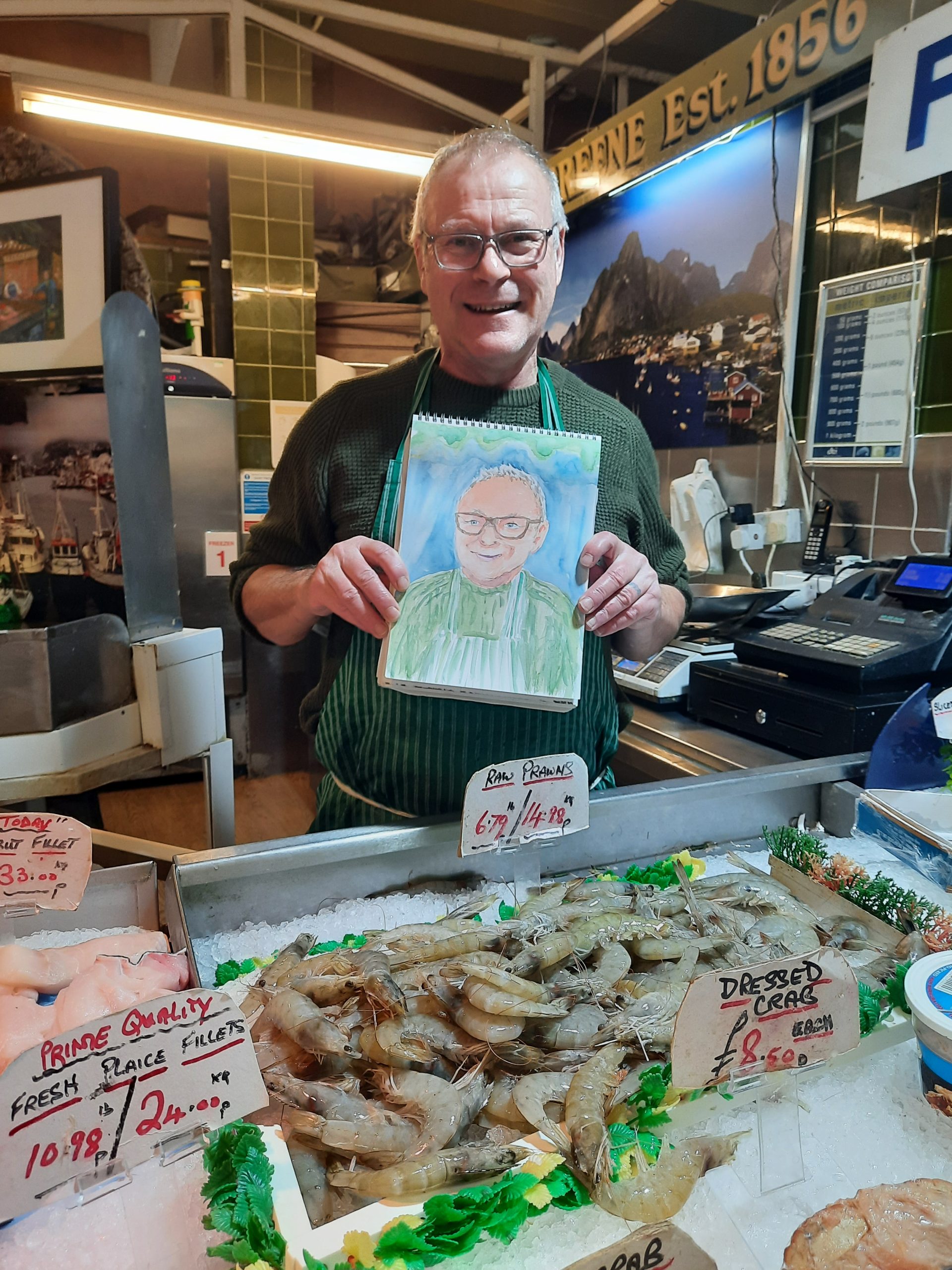
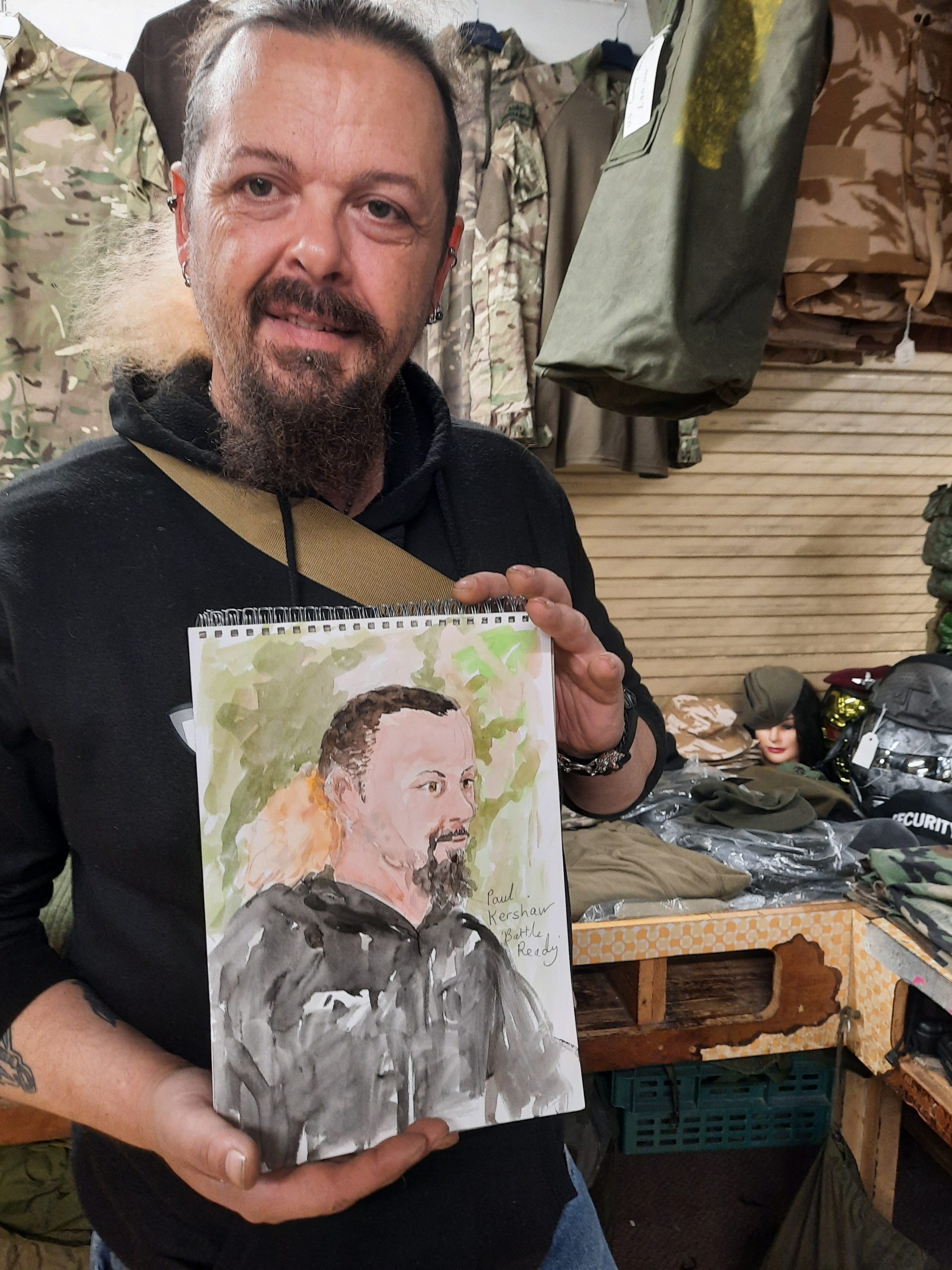
During the project Mary started to paint stallholders and ask for their stories. A selection of these are collected here:
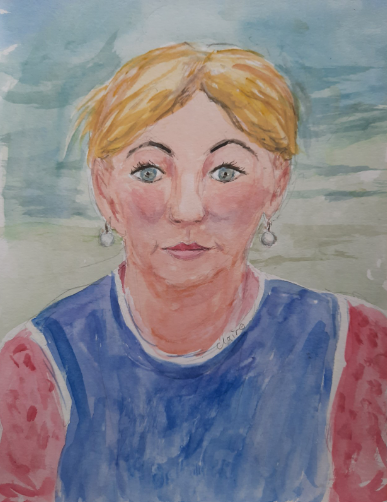
Claire Swiston – Swiston’s Cockles and Laverbread
Claire lives in Llanmorlais. Her husband is a 6th generation cockle supplier. Her son and daughter-in-law are also involved in the business. As well as selling in the market Swistun’s export produce to Spain.
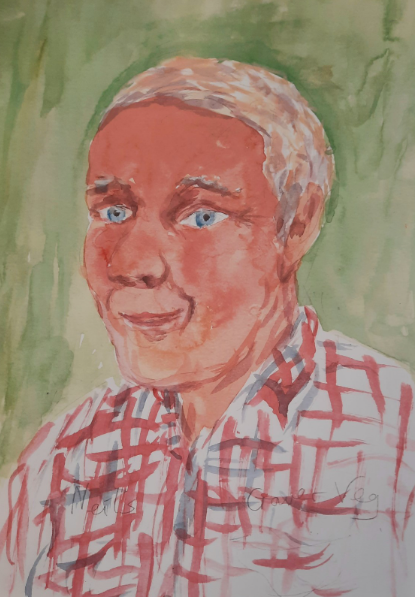
Neil – Neil’s Veg
Neil is a North Gower farmer, who is continuing his great grandfather’s trade of selling home grown vegetables and other local produce on Fridays and Saturdays. He began at 13 years of age by helping his grandmother at a table between cockle and laverbread sellers in the centre of the market.
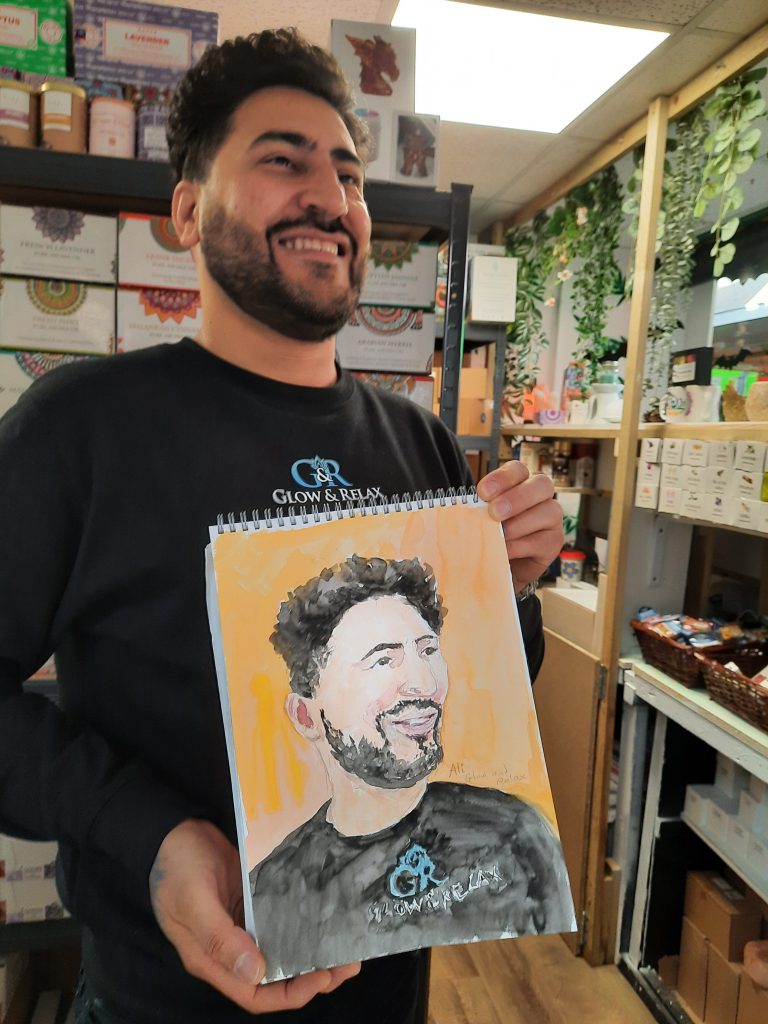
Ali – Glow and Relax
Ali is a talented linguist who speaks Italian, English and Farsi. He came to Swansea to study at the University. By chance he was offered a job in a mobile phone repair shop, where he spent years helping very stressed customers.
Realising that people needed help to relax he decided to set up a stall to sell calming products. Most of the essential oils, water features and other items are made in the UK.
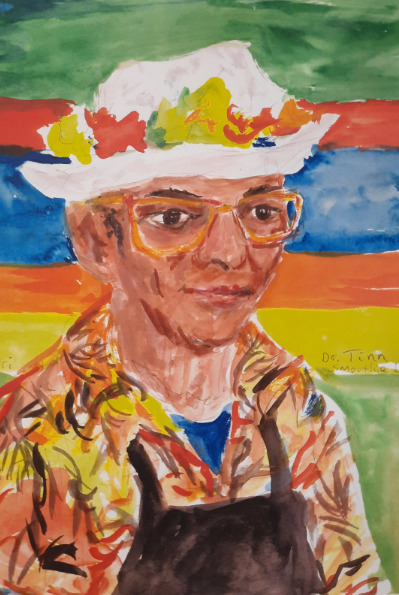
Dr. Tinn – Smoothie Den
Dr Tinn has always been concerned about people’s wellbeing and over the years has used his many talents to work for people’s health and wellbeing. To ensure that his smoothies are as natural as possible and contribute to a healthy diet, he gets up at 4a.m. to prepare vegetables and fruit and believes that “health is wealth”
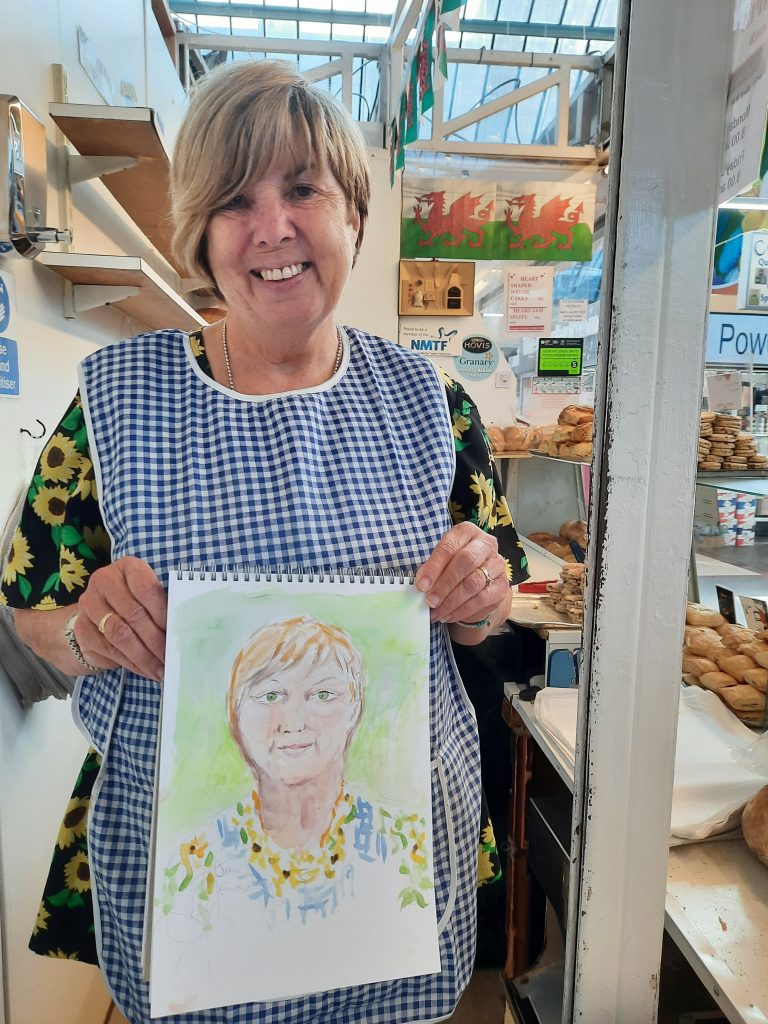
Jan – Traditional Bakery
Jan has been running her bakery stall for 45 years. She sells delicious crusty loaves and cakes. Welsh cakes are the most popular items including heart shaped ones. She has supplied these for weddings. She had a visit from King Charles when he was Prince of Wales and some of her stall’s Welsh cakes were included in a hamper presented to him. In her spare time Jan follows live music and is due to see Robbie Williams at Brixton Academy before his World tour.
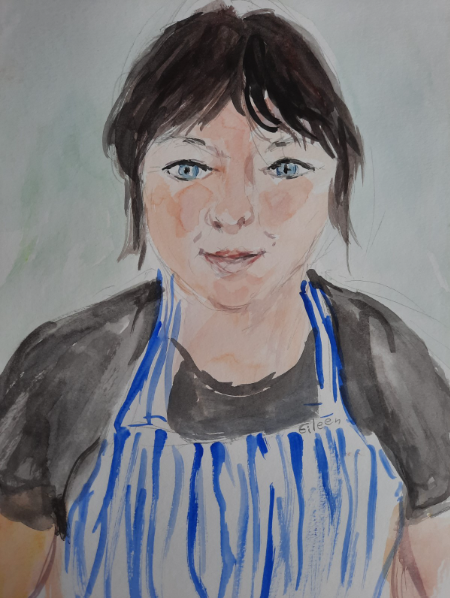
Eileen – Coakley Greene and Tucker’s Fish
Eileen is a very friendly adaptable person. She began working in the market on Saturdays when she was 15 and, apart from some years in Hodge’s menswear factory, has spent most of her working life there.
She worked on various stalls selling clothes, sweets and food until she and her brother (with the help of her four sons) took over the Bacon Stall, selling cooked meats and groceries.
When the stall closed Eileen was snapped up by Coakley Greene and Tucker’s Fish stalls, where she still works.
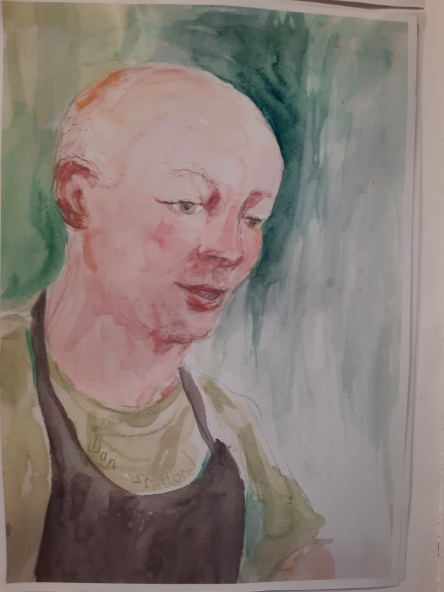
Dan Stallard – The Falafel Stall
Dan was an artist, creating beautiful bold, joyful paintings from nature, particularly flowers. He exhibited in various places including the Royal Horticultural Society Flower Show. One day at a Christmas market he saw someone selling coffee from a bicycle and had the idea of starting a mobile falafel stall to go to festivals.
Eight years ago he took a stall in Swansea Market, intending to run it as a sideline. However it has taken off and is very popular. He loves meeting people and following the stories of his regular customers. He offers fresh vegan takeaway food in environmentally friendly containers, sells drinks in glass bottles and recycles all waste.
Dan starts work at 5.20 in the morning and leaves after 6p.m… first in, last out! In order to have a balanced life he takes 2 days off each week. He finds his work satisfying and says “I get to give people happy bellies”
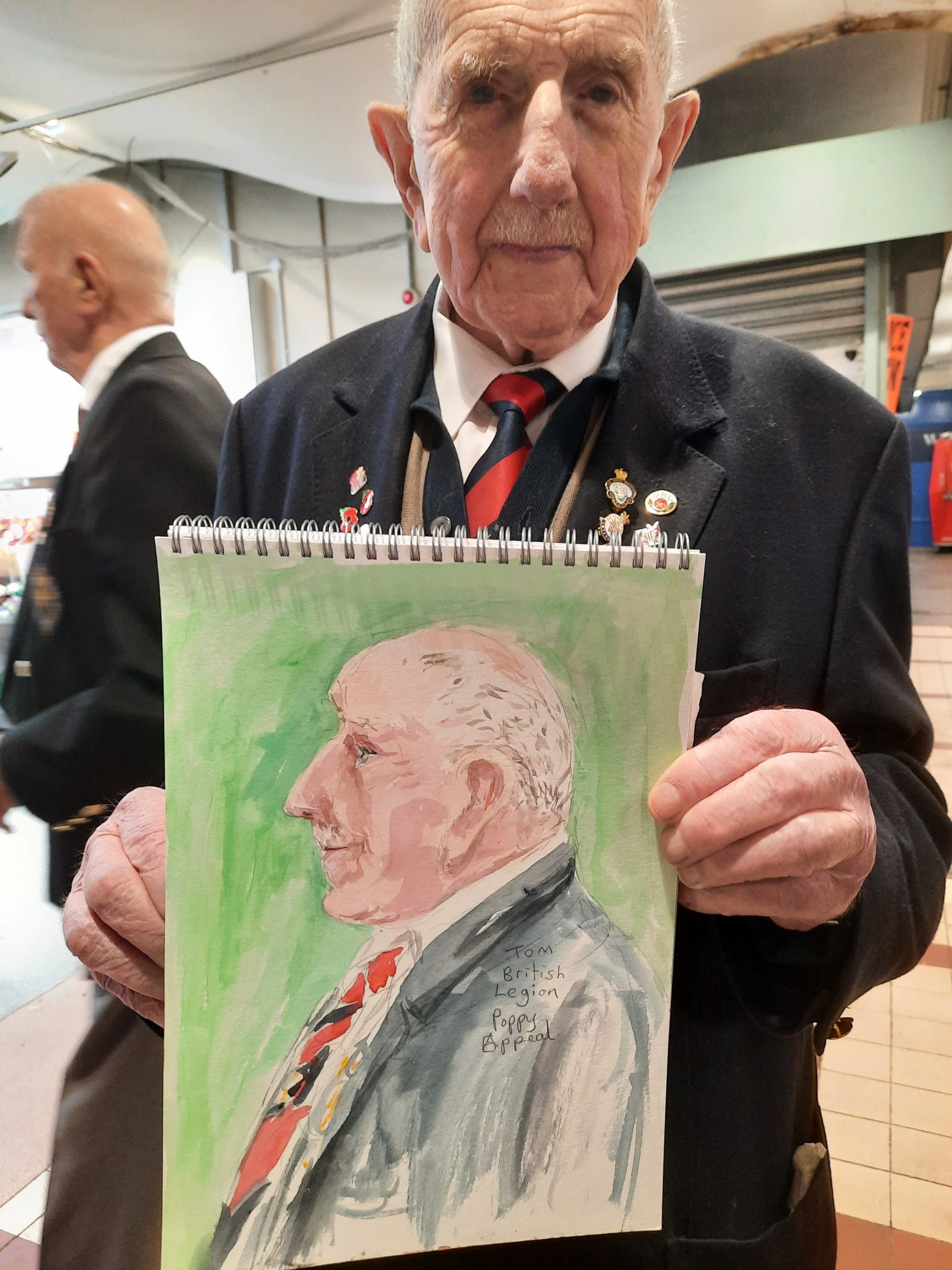
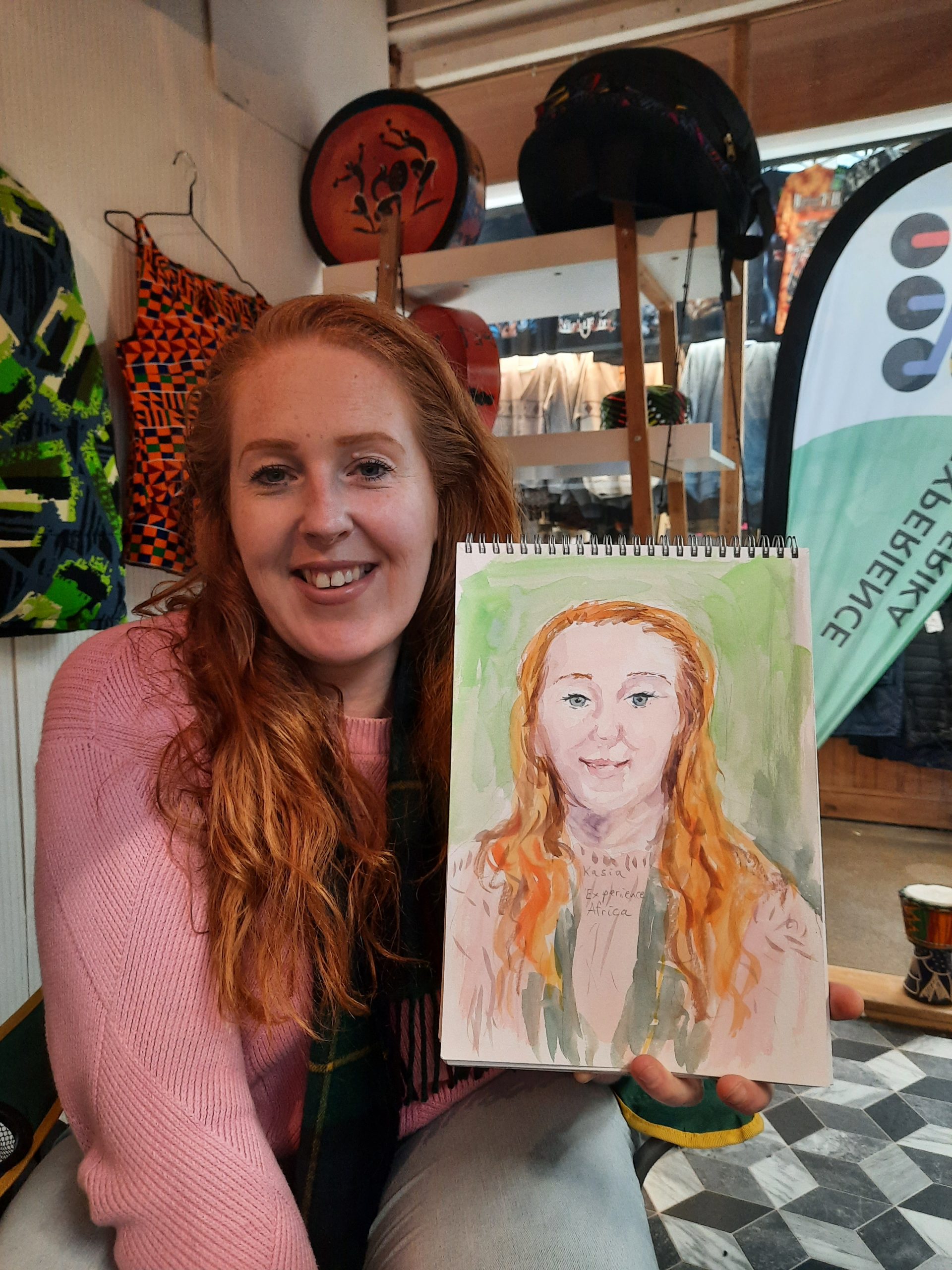
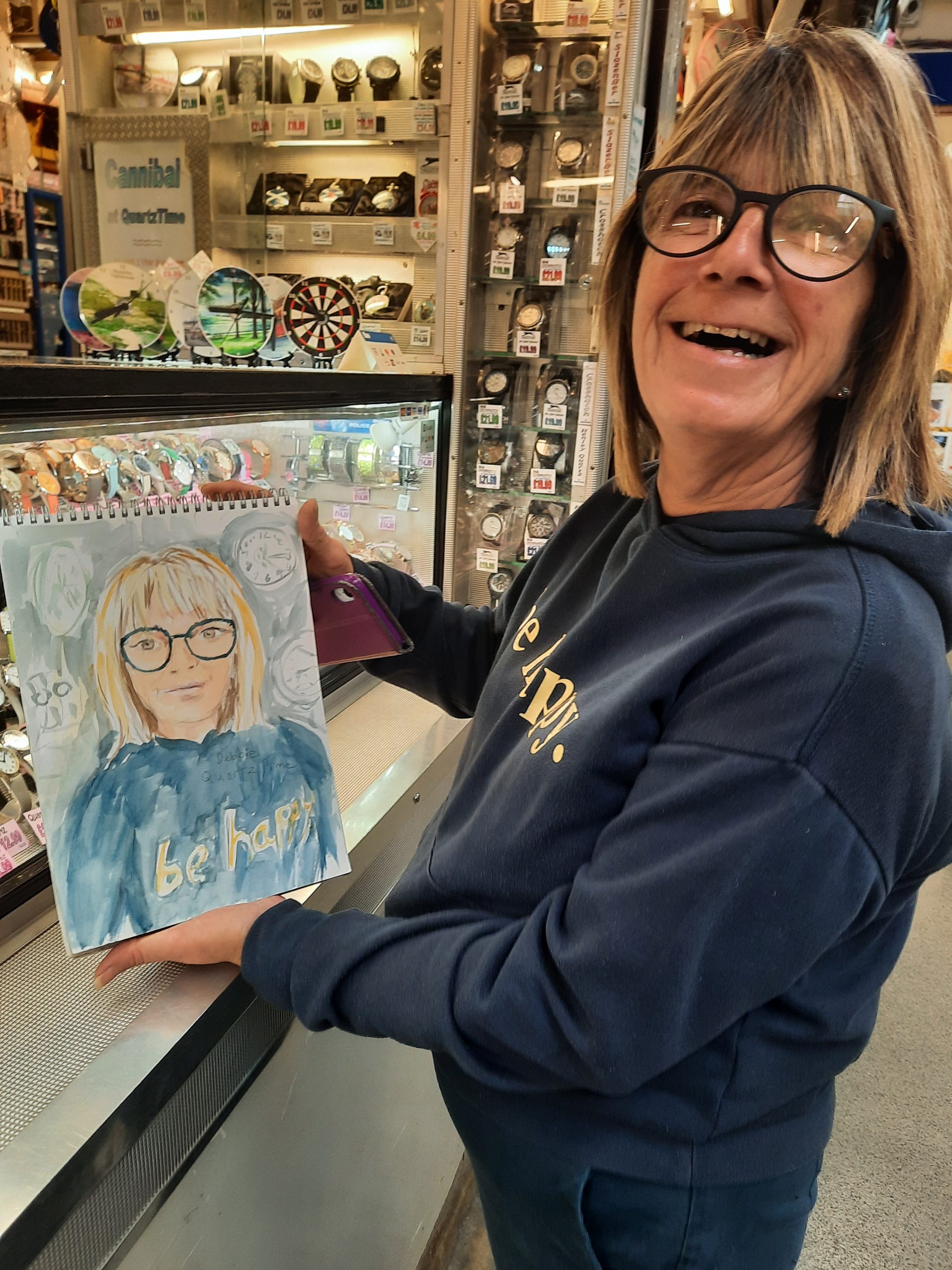
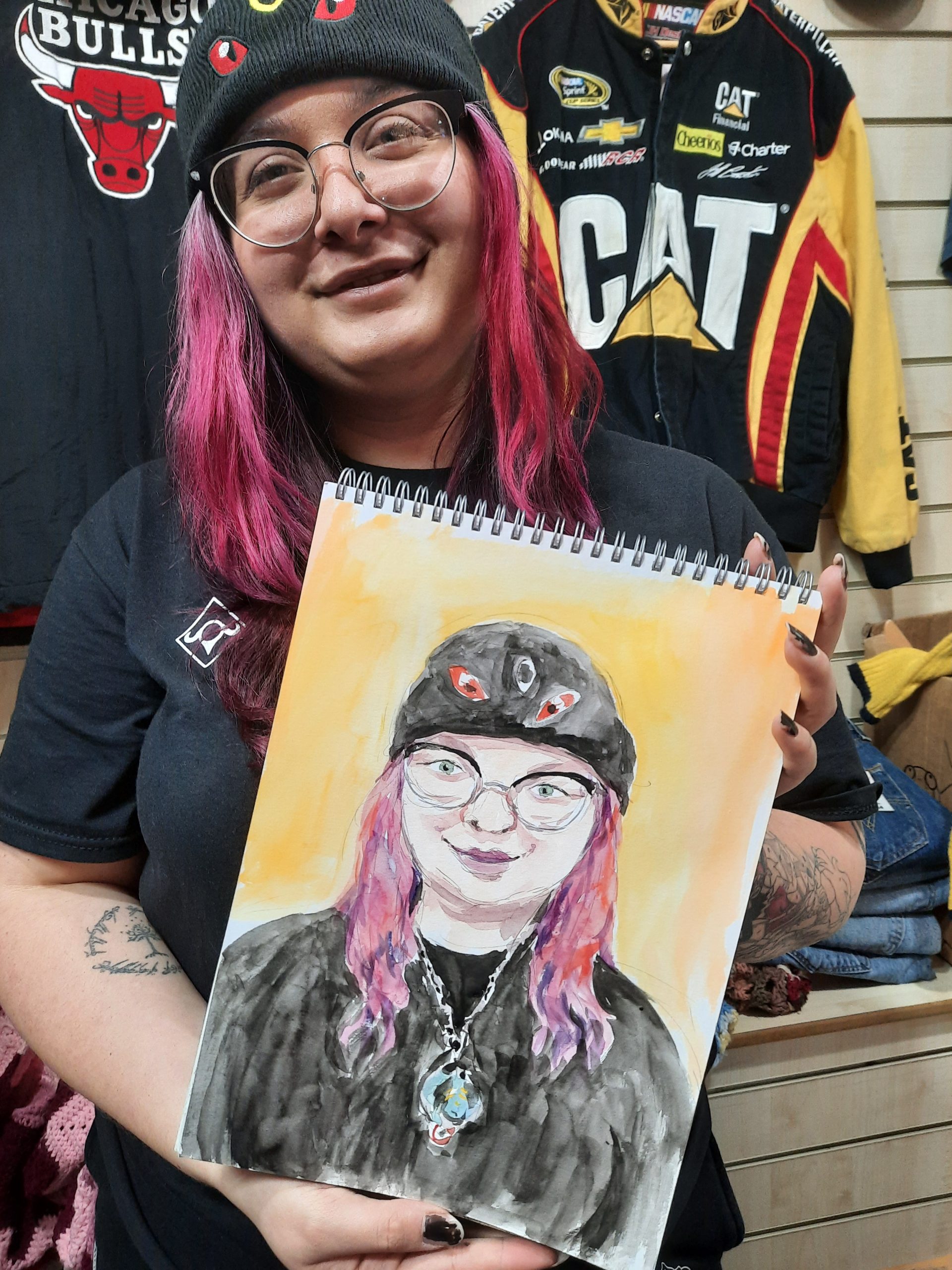
People’s Memories of the Market
Anne Peters (aged 79)
I remember the Saturday treat of going to the open-air market by the walls of the bombed-out building with a parent to buy chicken and having to step over rubble in town. She bought a tortoise in the market for half a crown (2 shillings and sixpence).
Ivor Sloan
My father worked for Scaffolding Great Britain and was hired to design and set up scaffolding to build the new market roof without disrupting the stallholders below. He hung the scaffolding from the metal girders. This was so successful that he was employed to do a similar job by the Carlton Cinema (now Waterstone’s). He loved that, as he only had to work mornings and could spend the afternoons watching films!!
Ernest Amour (aged 89)
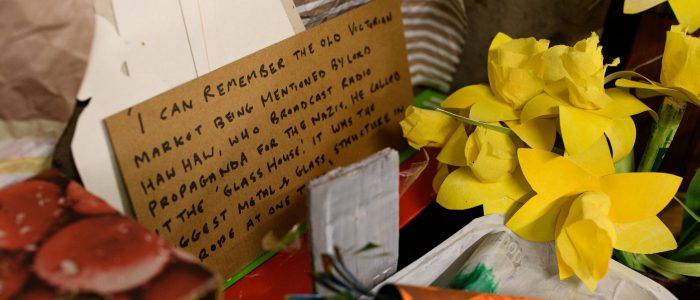
I can remember the old Victorian market being mentioned by Lord Haw Haw, who broadcast radio propaganda for the Nazis. He called it the ‘Glass House’. It was the biggest metal and glass structure in Europe at one time.
Dawn Williams
I was born in 1950 and started working in the market, when I was 13, on Frank’s toy stall, which also sold tortoises. I can remember them costing 15 shillings. They were kept in boxes which had been used for pie deliveries.
Frank
My mum had the china stall next door and the stalls closed as the family retired.